
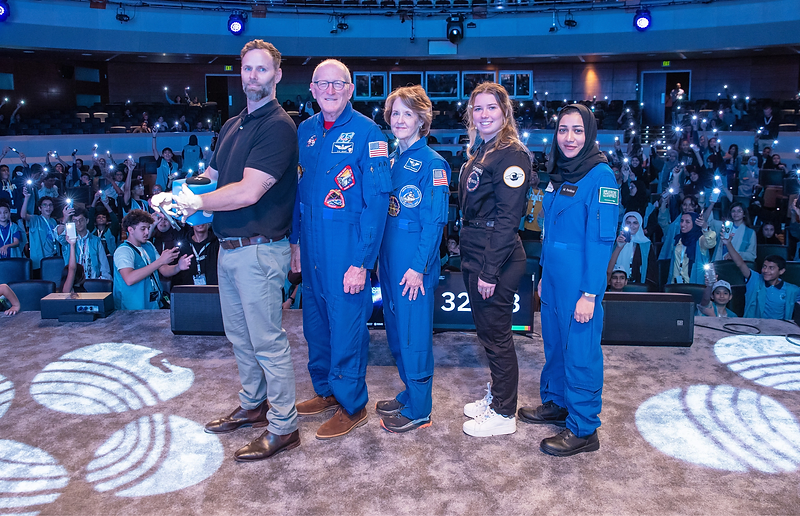
The CubeSat Challenge
Launch your students into space innovation. K-12 students design, build and deploy miniature satellites — a hands-on engineering programme aligned to STEM standards that fosters creativity, teamwork and real-world engineering skills.
The CubeSat Challenge
The CubeSat Challenge gives students a genuine engineering project with real constraints, real failure modes and real integration work — not a simulation. Mentored by NASA astronauts and aerospace engineers, teams move through three stages — design, build and launch — mirroring how real space programmes operate.
Students master satellite engineering fundamentals alongside ethical, collaborative practice. The programme is scalable from 10 to 200 students, meets physics, engineering and ethics standards, and culminates in each team launching their own CubeSat-inspired project.
From concept to reality
Three stages that take students from a blank page to a defended, working mission.

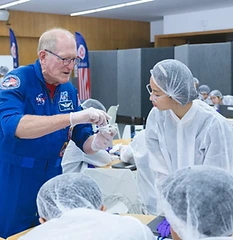
Design
Teams define mission objectives, select miniaturised components within 10×10×10 cm standards, and optimise power, thermal and structural integrity through CAD and simulation.

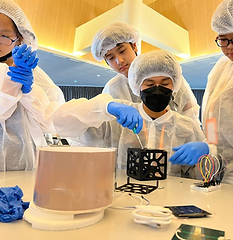
Build
Students assemble the CubeSat from off-the-shelf parts and custom electronics in a cleanroom — soldering circuits, integrating payloads and running vibration tests.

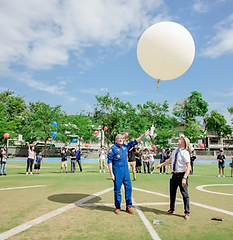
Launch
Crews coordinate deployment, often via high-altitude balloon ascent to near-space altitudes, then monitor telemetry, communications and atmospheric re-entry.
What students build
- Design — define mission objectives (Earth observation or technology demonstration), select miniaturised components (solar panels, antennas, sensors) within 10×10×10 cm standards, and optimise power, thermal and structural integrity through CAD and simulation
- Build — assemble the CubeSat from off-the-shelf parts and custom electronics in a cleanroom environment: solder circuits, integrate payloads and run vibration tests, iterating on failures cost-effectively
- Launch — coordinate deployment, often via high-altitude balloon ascent to near-space altitudes, then monitor telemetry, communications and atmospheric re-entry risks
- Defend the mission in a showcase to astronauts, engineers and peers
Outcomes
- Boosted STEM engagement and retention, with students moving from consumers of technology to builders
- Embedded leadership, communication, teamwork and ethical tech use across every module
- A signed NASA astronaut completion certificate and a portfolio-ready mission project
Bring The CubeSat Challenge to your school
Tell us about your students and your calendar. We'll send a costed proposal within 24 hours.